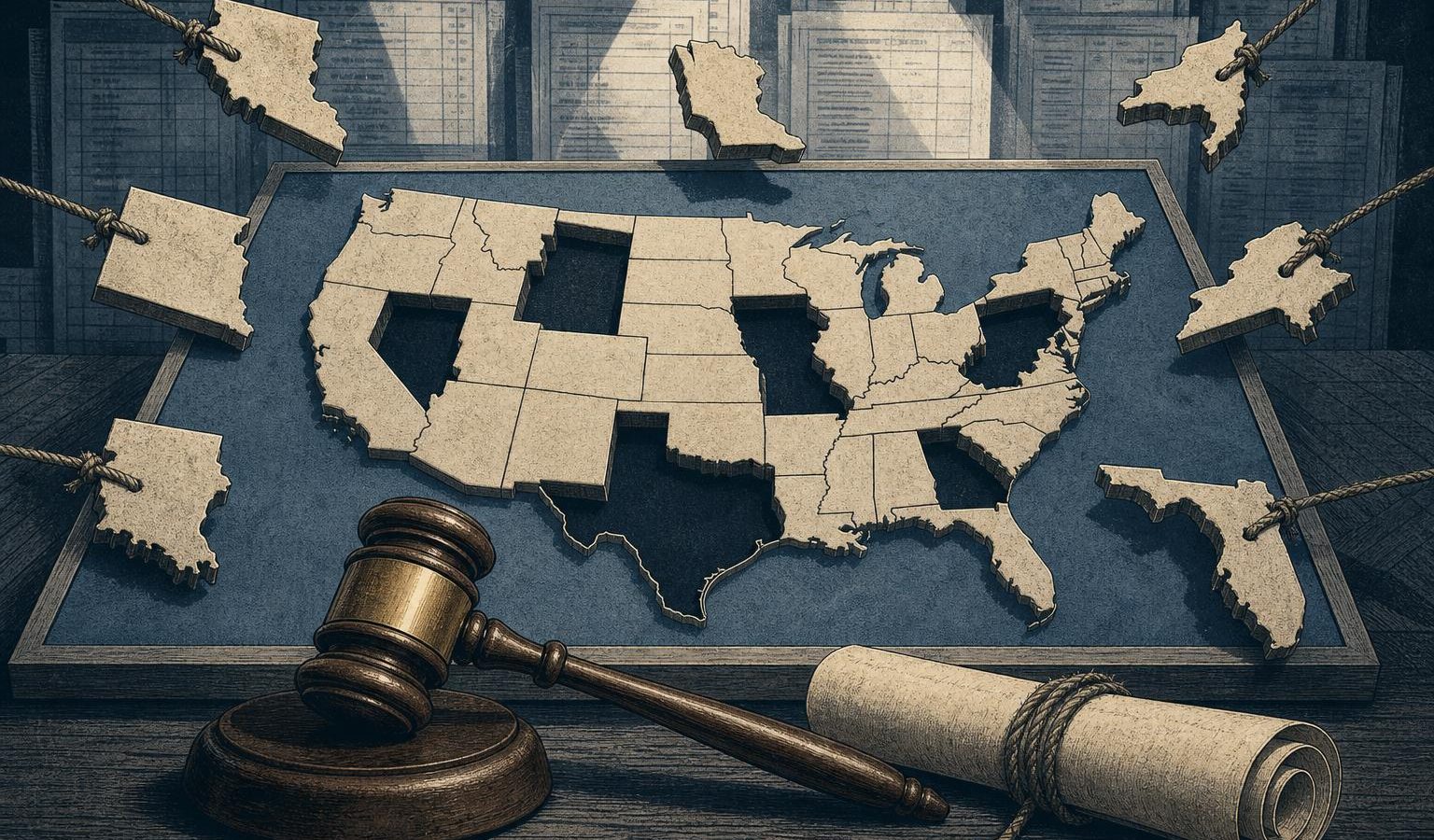
Kalshi customers in Washington, Michigan and Nevada cannot log on and place a trade. The prediction market platform is locked out in all three states, the latest fallout from a legal fight that keeps widening between state regulators and the federally chartered exchange. The question underneath it all: who gets to police event-contract markets?
Washington moved first. A local court order last week accused Kalshi of operating an unlicensed gambling business. Attorney General Nick Brown was blunt. “Kalshi has gotten rich promoting wagers on sports, elections, natural disasters, events related to the Iran War, and more,” he said. “Under this order, Kalshi is banned from offering wagers on most of those topics in Washington.”
Kalshi fired back Thursday. The company filed a motion asking the court to reconsider, and its argument zeroed in on a competitor. Crypto.com, Kalshi pointed out, is still offering the same event contracts that got Kalshi shut down. Six days after the court halted Kalshi’s operations, the state announced it would not enforce gambling law against Crypto.com until appeals run their course. Kalshi called Crypto.com an “identically situated competitor” now trading freely “with the blessing of the state.”
The company took its case to users, too. In an email to affected customers, Kalshi wrote: “The Washington state government has blocked your right to trade freely on Kalshi.”
This is hardly just a Pacific Northwest problem. Legal clashes are playing out in Massachusetts, Minnesota, Ohio, Maryland, Utah, Arizona and New York, according to the report. Connecticut regulators faced off against Kalshi in federal court this week over whether state gambling laws reach the platform. New York is fighting a separate battle, disputing a recent CFTC emergency action meant to keep Kalshi live there. A CNBC headline in late July said the CFTC had sued nine states to block restrictions on prediction markets, and that 44 states had argued the federal agency lacks authority over sports-related event contracts. Those figures could not be independently verified from the full article.
Kalshi’s card to play is its federal charter. The Commodity Futures Trading Commission regulates the exchange, and Chairman Mike Selig, the agency’s lone sitting commissioner, is pushing to assert that federal authority over state gambling regimes. The CFTC is supposed to have five commissioners. With only Selig in the seat, he can set policy on his own for now.
At the agency’s first Innovation Advisory Committee meeting this week in Washington, Selig said previous CFTC leaders had “put their heads in the sand” or tried to ban event contracts outright. He signaled the agency would move quickly to modernize its framework and “institute consumer protection requirements.” Proposed amendments, Selig said, would “establish clear expectations for product governance, market design, and incentive programs.”
That last piece matters. A federal consumer-protection overlay would hand Kalshi and similar platforms a regulatory floor. State arguments that these products are just unregulated gambling get harder to sustain.
The meeting had its rough edges. Terry Duffy, head of CME Group, cautioned the committee about manipulation risks. “There’s a lot of things that are susceptible to manipulation,” he said. “That is horrible for our industry. We’re not a bunch of carnival barkers at the circus.” Duffy, whose derivatives exchange competes in some ways with prediction-market newcomers, pointed to bets tied to a White House teleprompter incident and to U.S. military action in Venezuela. The agency is reportedly investigating the teleprompter matter, which involved Kalshi contracts, though that has not been confirmed.
Things got heated between Duffy and Kalshi COO Luana Lopes Lara. “Terry, has CME never had any issues with any market manipulation?” she asked. “Maybe you should learn a bit about efficiency then.” Duffy shot back: “Maybe you should learn about credible markets.” Selig stepped in. He noted that one incident Duffy cited had taken place offshore and called it “fake news.”
The stakes reach past courtroom procedure. Jaret Seiberg, a policy analyst at TD Cowen, wrote in a Friday note that Selig’s promise of consumer-protection rules “may reduce the risk that senators try to attach prediction market amendments to the farm bill or other legislation that Congress will try to enact in September.”
Whether CFTC rulemaking can actually override state gambling laws is unresolved. For now, the fight plays out court by court, state by state.